
What makes an Indian Indian? Of course, there are the cultures. From South to North, the language, music, attire, diet, tradition, dance, literature, education, and many more aspects differ. A person becomes a member of an ethnic group when they share memories and practices across time and space. Celebrating culture often means promoting its beautiful parts. But you cannot be selective when facing the massive torrent of culminating memories of pain and glory, with an inexplicable depth of emotions.

On the early evening of Indian Cultural Night, May 8th, more than 110 people gathered in a badminton court at Monash University Malaysia. The number of participants far surpassed the Monash Indian Cultural Society’s (MICS) initial estimate of 50, drawn by the promise of a diverse range of Indian food and an open dance floor following the performances such as traditional dancing from the Indian-Nepali Club, Vinnai playing, and singing popular songs from Kollywood, Bollywood, and other sources.
“The main goal of this event is to introduce Indian culture to different races and cultures,” said Kogiilan, the Head of Events at MICS. Reflecting on the impactful success of Mingle Night by MICS, the key to appealing to Monashians was unorthodoxically breaking the popular image of ‘Indianness’ and showcasing the wider array of Indian cultures. The question MICS asked themselves during the two-month preparation process was simple: How will we bring the extremely diverse Indian culture to the stage? The answer was hidden amongst the hindi, tamil, and Malayalam music beat, the lungi’s and sari’s rustling sounds, and the low whispers softly emanating from the crowd.

Kogiilan explained, “We invited the Indian students to join in creating the event for them through the anonymous feedback in terms of crafting inclusive playlist and coming up with the variety of food, such as our classic masala tea, bru coffee, vadai (traditional Indian chickpea snack), and so on.”
In a bluish-black achkan, a student volunteer answered without hesitation my question about his opinion on the most crucial part of Indian culture. “It’s the people. Everyone gathered here is representing our identity. To some people, it can be shocking. For, see my friend over here, she is Chinese but wearing the traditional Indian attire and singing along to Tamil songs. This is how we not only show our culture but also meet new people. It connects everyone – North Indian, South Indian, Malaysian Indian, and even the people who have never experienced our culture through food, art, and collective experience of dancing. Because I think what’s most critical is to show the inclusivity.” “I love this. There should be more events like this,” said the friend, chipping in. They said and encouraged me to stay longer and have some food. It was a different question, but the same answers. Why was that?
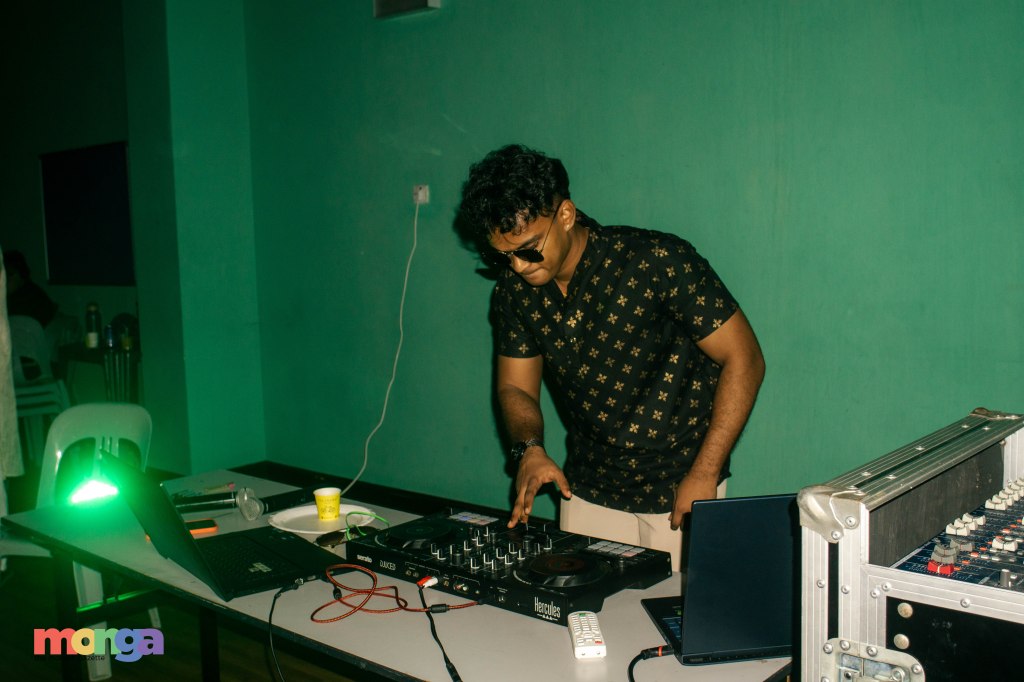
Indians Gathered for Indians
Contrary to my expectations of many Monashians stepping outside their comfort zone, only a handful of non-Indian students were in the crowd. It was unusual, especially considering the campus demographics, to see the majority race become the minority. And that majority was mostly absent. I remembered reading MICS’s promotional posts on their official Instagram page, which said this was not an exclusive party for Indian students. Still, there were too few non-Indian attendees.
Throughout the stage performances, there was a calmness among the crowd. Indescribable yet apparent, even smoke and neon lights from the stage couldn’t hide it. It was a tension – the crowd was observing the performances. Yet, it was not out of disdain. Rather, it seemed they were navigating conflicting thoughts. These thoughts were not new; they transcended time like an old ghost, a haunting legacy. As a Korean and celebrating the Day of Emancipation from Imperial Japan in August, I couldn’t help but think because it is a question that always visits me when I experience parts of my culture and its people:
Can we really love our culture as the colonized?

Learn to Hate Your Culture
Some generational experiences shared among minority ethnic groups are impossible to dilute or forget. They refuse to be judged by the dichotomy of good and evil, positive and negative. This feeling always exists around them. Sometimes, it comforts their lonely heart, but it can also evoke the most tragic feeling of belonging to a shameful, dirty, and primitive culture. This could explain why some cultures can be celebrated to their fullest yet also insulted by the ethnic minorities themselves. The indignation felt about something in one’s culture makes it impossible for the ethnic minority to simply celebrate its beauty. As a colonized person, it is a lifelong fight between self-degradation of the culture and the adoration for it. If you are accustomed to scrutinizing your culture, you cannot present it to others – others who would not understand what you feel when thinking about your culture – the chaotic concoction of love, fatigue, mesmerization, curiosity, pride, and disgust. And the minority would ask: is my culture truly worthy of celebration?
That night, I posed and answered that question. The students on the stage looked shy, but there were fleeting smiles on their faces. Out of anxiousness or confidence, I could not tell, but they seemed proud after their turn. Exposing the minority’s culture to the majority is often destructive for the minorities. To let others see the beauty of their culture, the person must first love it. Therefore, being culturally diverse means focusing on yourself again, tearing yourself apart, embracing both the beauty and the ugliness, and finally showing others who you are – your spot on the map, existing isolated. It is torturous to show outsiders that you cannot connect to your heritage in the way they expect.
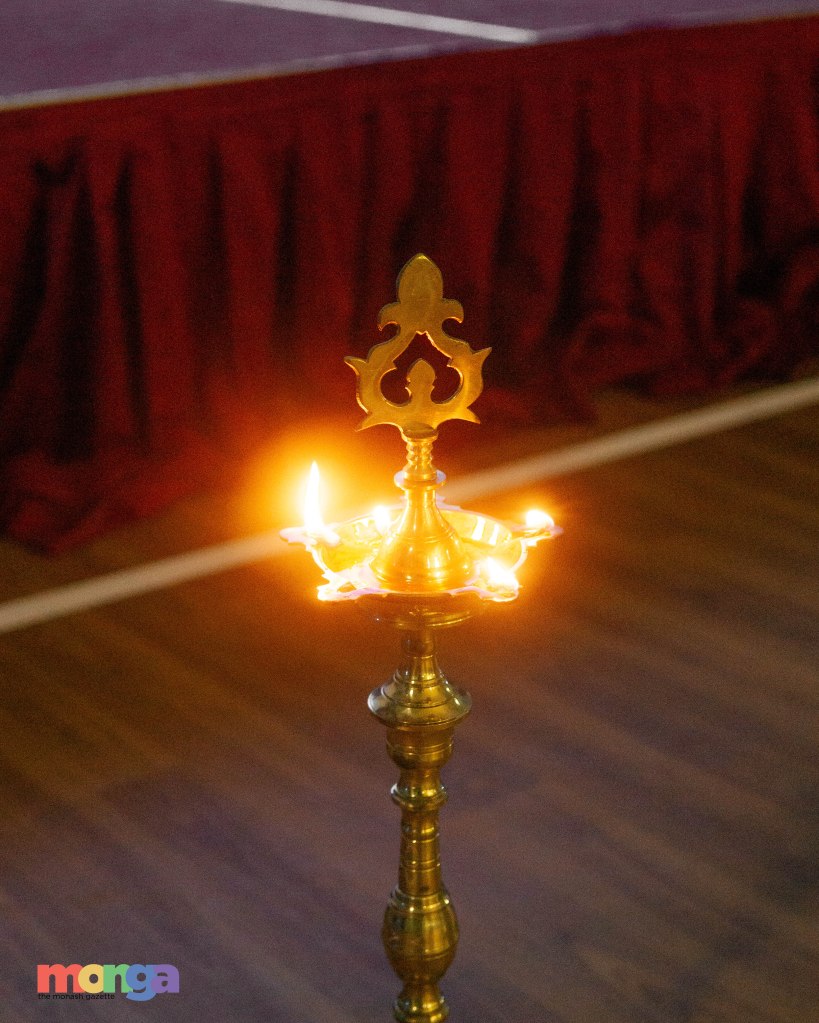
Fight to Love Your Culture
Taking a broader look, diversifying a country cannot, and should not, be burdened onto the shoulders of the minority. The breathtaking self-regulations, body dysmorphia, mental illness, and obsessive pursuit of spotless images that the Indian community voluntarily practices are for the majority’s consumption. Diversity is not about changing the minority to satisfy the majority. The majority needs to listen when ethnic minorities question Malaysian society, a world they adore but also find deadly. Monash University Malaysia, which promotes itself as an inclusive, international, and diverse educational institution, still needs to consciously cater to the ethnic minorities on campus – people who are many but still unheard of.
Nevertheless, viewing the issue solely from the perspective of colonization is insufficient. Discrimination, violence, and disparities exist even among Indian people – Tamil, Telugu, Hindi, Marathi, Bengali, Kannada, Punjabi, Odia, Gujarati, and Malayalam, among others. They carry the identity of Indians but exist in different dimensions. However, one thing is clear: they will never stop fighting against the elusive chains of self-hate. They might falter; they might think the shackles are justifiable, but living as an ethnic minority is already revolutionary. Living itself is a celebration.
I was lucky to interview a duo of traditional dance performers who had just come down from the stage. Their kannu mayi (traditional Indian eye makeup) was slightly smudged from sweat and smiles. They dabbed their foreheads with tissue paper. I asked them about their thoughts during the preparation for the performance. “It was nerve-wracking. We had less than two weeks of practice while swamped by coursework, arriving on campus around 7 am daily.” They showed me their saris adorned with sparkling beads and lace. They said their knowledge of traditional dancing and the meaning behind the moves became more profound by the YouTube videos and social media reels. Reconnecting with the culture by the intangible flow of loving the culture. Just as they were about to continue, the music died down, and I could hear the voices whispering among the crowd – soft, muffled, yet never identical. “Through this dance, we want to show the people at Monash that our beautiful culture is for everyone to celebrate. This night is for the underrepresented people within Indian society too,” they said, looking at the stage with hopeful eyes, “because it is what we need to do.”

Written by Juyeoung
Photos by Youshau
 musamonga.com