
The production and construction of mingle events at the start of the university semester unequivocally champions the idea of ephemeral third spaces serving a purpose of deconstructing the normality of being antisocial. It is being thrusted upon people that making small talk and conversing about seemingly inconsequential aspects of your life is now perfectly fine.

Social Shuffle is not a third space but it is an event that can act as a third space for students temporarily. Arguably, when the environment of banter and conversation is created to be apparent, the event, although lasting just a few hours, would be sufficient to forge relationships between two strangers or perhaps more. Forty groups in total with approximately two hundred participants, Social Shuffle proved to be the introduction of freshmen to Monash’s vibrant student life.

This is your typical mingle event with continuity and aggressive interaction, as a mingle event should represent. The organisers attempted to amalgamate the Monash student culture into the games being played. Specifically, Family Feud consisted of prompts related to the student experience. “What is the most common food students eat on campus?” and “What is the main reason students beg for money from their parents”, questions along the lines of this evidently creates an expectation along with a conversation topic.
The conceivable idea is that for a mingle event to be successful, the games played and the prompts given should elicit somewhat of a conversation between participants and that the conversations should naturally be superficial. This was achieved due to the brief intermission between the main games where small quizzes and interactive activities were slotted in.
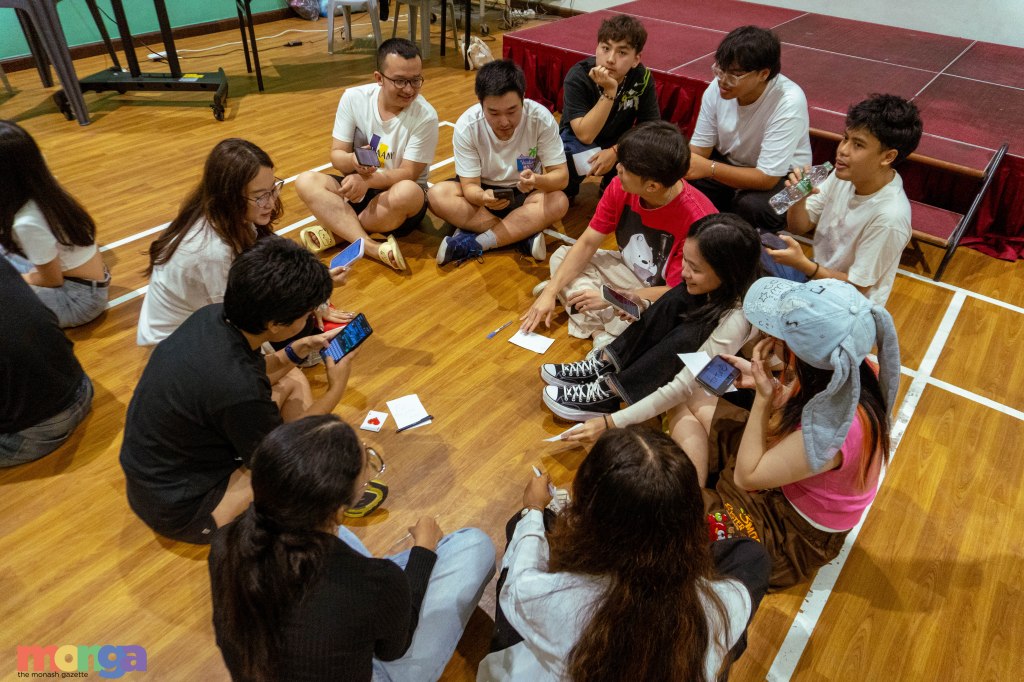
The fostering of community and a sense of belonging defines Social Shuffle to be a third space. Despite having a large turnout, the facilitators encouraged participants to interact with multiple people rather than sticking with the friends they came with. This entire event had a unique aspect at which there was a clear end goal. The sequence of games served a purpose to collect white cards. The more points you accumulate at the end of all the games, the more white cards you will then be given.
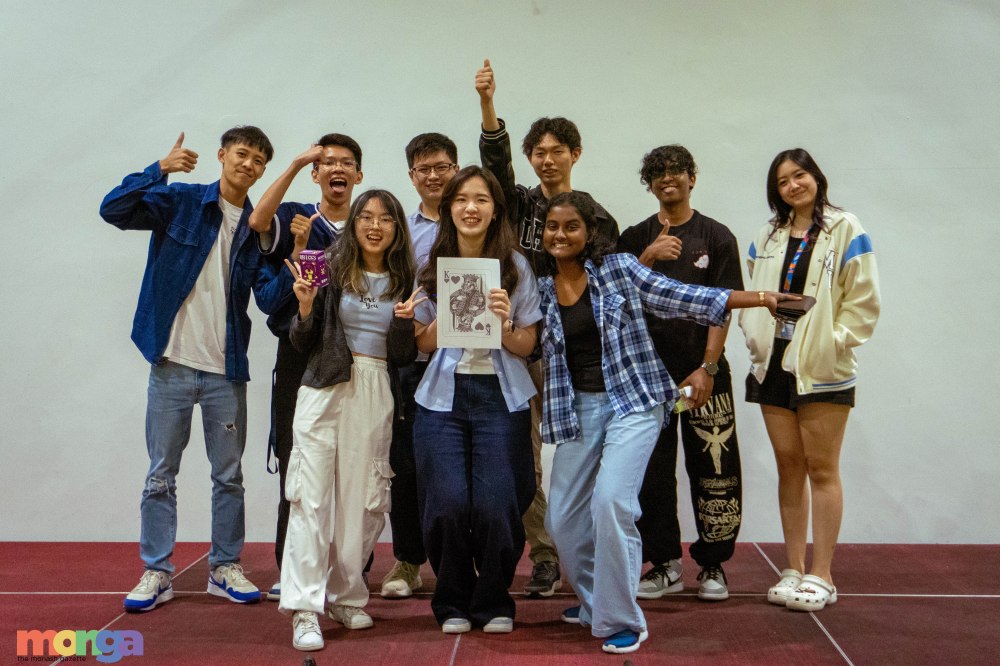
These white cards resemble not a concept but surprisingly another game. Familiar but not necessarily repetitive, it was cards against humanities positioned to be the final game of the night. Ideally, the more cards you obtained, the higher the likelihood it was to have a good answer to the prompt. This was another attempt to elicit conversations and to expose personalities. The controversial and almost ridiculous nature of cards against humanities would mean that the conversations being shared were not forced, rather it was organically linked to the game itself.

At the end of the night, prizes were given out, friendships were forged, and instagram handles were exchanged. You now have one more person added to your rolodex of friends you say hi to on the way to class.
Written by Yashven Jayabalan
Photos By Kaira and Crystal
 musamonga.com