

Borders were invisible, but the tension wasn’t. On May 10th, the much anticipated MUISS Olympics kicked off, proving once again that international students don’t need politicians to air their rivalries—just a dodgeball and mild dehydration. You can hate the government, the carbs, even your own passport. But the second someone says you’re playing for your country, something ancient wakes up. Suddenly, your accent’s a flag, and your multicultural friend group becomes the opposition.
Twelve communities showed up, some in jerseys, others with nothing but adrenaline and loud opinions. The air was thick with chants and cheers, the kind of fierce loyalty you don’t need to be a fan of sport to recognize, that primal hunger, the obsessive need to win that burns hotter than any rational thought.
This wasn’t just sport. It was theatre. Every tug in tug of war, every sprint in the relay race, every dash and dodge in jail break carried more weight than just a score. Because at that moment, it wasn’t about who you were with yesterday or who you’d be friends with tomorrow. It was about where you came from. The easy camaraderie of mixed crews didn’t vanish, but it fractured just enough to remind you that loyalty here isn’t a choice, it’s a reflex.
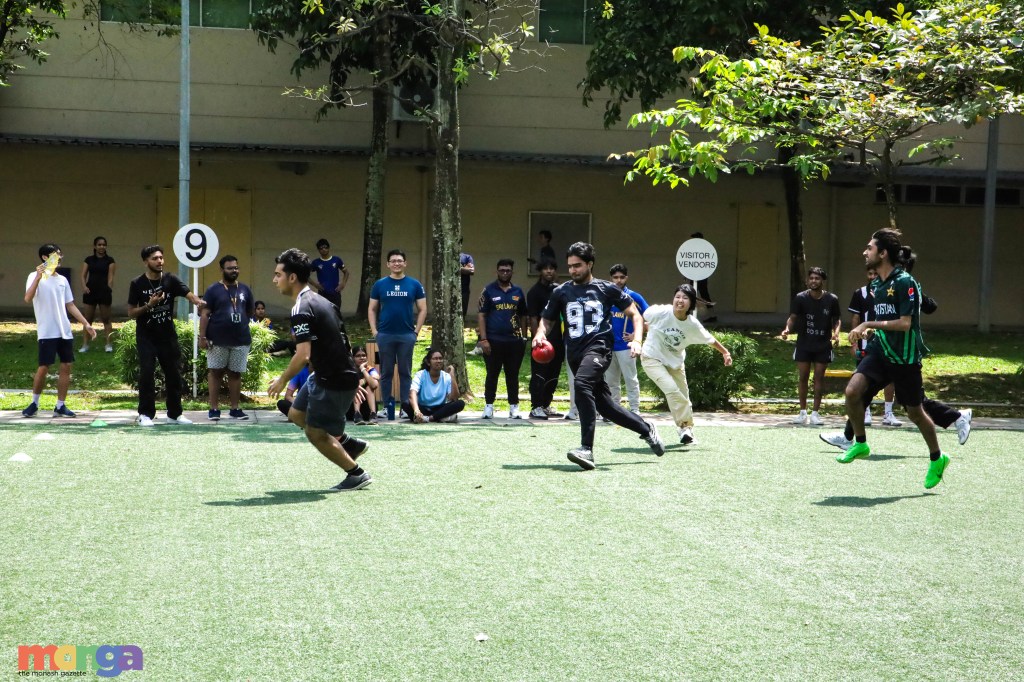
The day started with Jailbreak. A simulation, sure, but simulations are only ever as harmless as the people inside them. And these people? They came ready. Now the rules? A mess of contradictions and confusion for anyone on the sidelines. But that’s the beauty of it. Each community played it their way, almost like they’d been rehearsing for this. And you could see it in their eyes. Offense wasn’t strategy here, it was lowkey survival. Defense wasn’t a tactic, it was instinct.
Korea doesn’t blink. Their strategy is so clean it’s almost clinical. Just tight defense, perfect spacing, and plays that look like they’ve been rehearsed under military lighting. You’d think that kind of discipline would be boring. It’s not. You watch them win and feel like they never broke a swear. Like they knew you were watching, and wanted you to know: this is how it’s done.
Mauritius somehow had already figured this out. They didn’t talk much. They didn’t need to either. They moved with the kind of quiet certainty that makes you nervous even if you’re not playing. It was annoyingly effective as their runners didn’t waste time and their defenders didn’t overthink, so it was clean and calm.
Then there was Sri Lanka, who were everything Mauritius wasn’t, loud, expressive, emotionally charged in a way that didn’t just energize the team but pulled in the crowd too. You could tell they weren’t just playing to win, they were playing to prove something, maybe to themselves, maybe to the people watching, maybe to the idea that heart sometimes matters more than planning. And for a few minutes, you believed they might just pull it off—until the energy burned a little too hot and the coordination slipped.
And then there was India × Nepal, who didn’t just show up, they arrived. You could hear them before you saw them, and once they were in the game, there was no mistaking whose side they were on. Their energy was contagious in the best way and maybe also the worst, because with that much adrenaline comes chaos, and with chaos comes mistakes.
But honestly? No one cared. Because once you’re on the field, you’re not just representing a country, you’re carrying a version of it that only exists here, in this weird little diaspora bubble, where accents are borders and friendships have parentheses, and every tag feels like a metaphor you’re too tired to unpack.
And if you didn’t get that from watching, you weren’t watching close enough.
Somewhere between Jailbreak and the next game, Tug of War, lunch was served. Lukewarm promises in cardboard containers that forgot to account for seafood allergies, vegetarians, and basic math. You’d think being an afterthought would sting less the tenth time around but there’s a specific kind of humiliation in being forgotten, then remembered just enough to be pacified. Not fed. Just… handled. MUISS must’ve thought we were all carnivores by default.

Tug of War wasn’t just a test of strength, it was a masterclass in quiet desperation. It was sheer willpower, not for show but because surrender wasn’t an option. A heavy rhythm of bodies pulling against gravity. Communities locked into their grips, blending fierce determination as a moment to reclaim control in a world where so much feels uncontrollable. From the sidelines, the crowd’s cheers twisted between genuine hype and sharp edged bets whispered under breaths. Some shouted encouragement, others laughed at the slips and stumbles, but no one looked away. And then in the middle of serious pulls, MUISS decided to throw in their own little break, dragging a few players for a quick, no pressure tug. It was absurd, almost childish, a brief crack in the tension. Reminding everyone that beneath the fierce rivalries, there was still room for a little fun before the next round of silent battles.
No rest for the weary—breathe in, brace yourself, and off we go again.
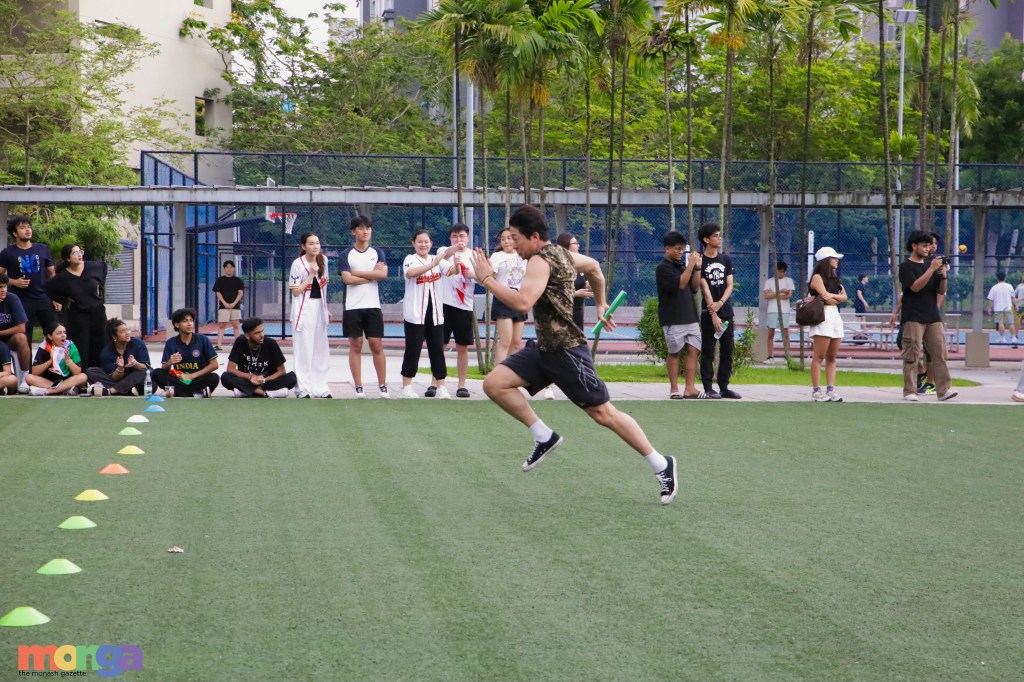
The Relay Race started like a flicker of hope. I swear time slowed when a sneaker broke free mid run, flying like a stray projectile. One runner hit the ground with a thud that felt louder than cheers. That pause between the drop and the catch was pure Spielberg suspense, like the world hung on a single baton handoff. Korea sliced across the line first. Sri Lanka and India × Nepal thundered neck and neck toward the line, separated by barely a second, every muscle straining in a blur of motion; I found myself between Nikita from Sri Lanka and Daniel from Sarawak—Daniel hoisting the Sri Lankan flag high, voice cracking with battle cries that felt both absurd and unforgettable, the kind of moment that nearly made me miss the next handoff.
By 5:30 p.m., three games in but a lifetime of inside jokes born. I arrived anxious about crowds; I left hoarse from cheering in four languages. The winners’ ceremony unfolded slowly, First place went to Mauritius × China, Korea took second, their disciplined precision earning respectful applause. Pakistan claimed third, erupting into a celebratory roar that shook the sidelines. Japan came in fourth and lastly, Sri Lanka rounded out the top five with fatigue and pride mingling on their faces in equal measure.
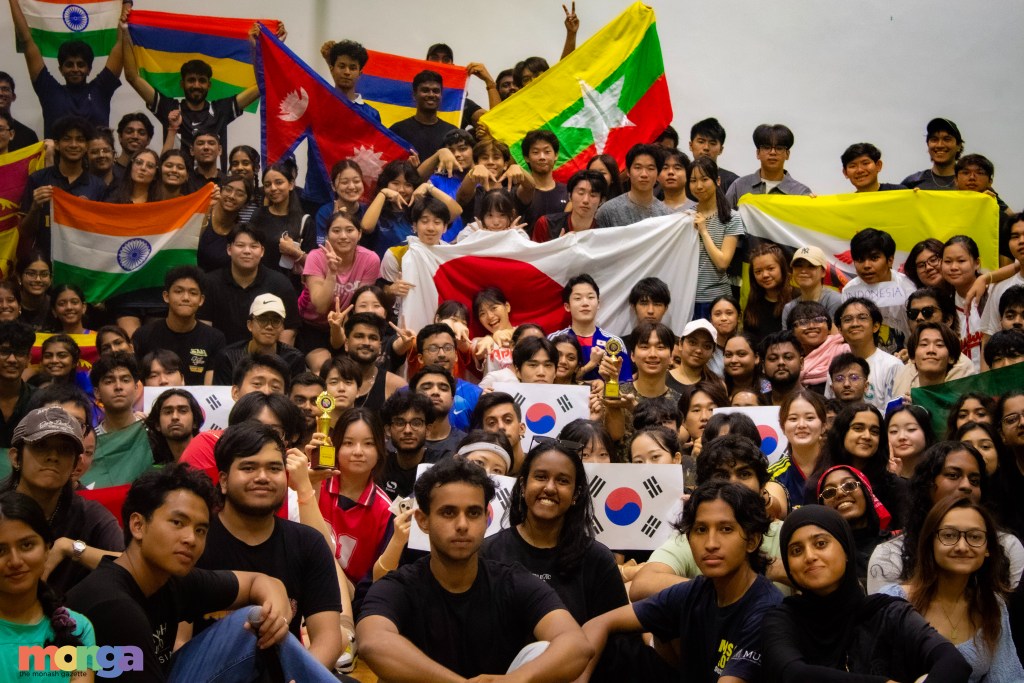
To everyone who laced up, shouted from the sidelines, or waved makeshift flags: thank you. You didn’t just play games. You made this a story, a memory, a riot of colour and noise in a world that often tries to silence both. Until next time, One World—see you on the field
written by Jananee Jagadeesan
photos by Mashrurah & Rida
 musamonga.com