
A guy gripping a table and laughing nervously while a small machine sends waves of “period cramps” through his abdomen isn’t exactly what you expect to see on a regular afternoon at Monash University Malaysia. Yet that moment turned out to be one of the most effective conversations about women’s health on campus.
The IWD × HPV Awareness Campaign, organised by the Monash University Malaysia Student Association, blended celebration with education in a way that felt less like a health seminar and more like a curious crowd stumbling into something unexpectedly meaningful. Held in conjunction with International Women’s Day, the campaign aimed to spark conversations around women’s health while raising awareness about human papillomavirus (HPV), a virus linked to several cancers, including cervical cancer.
But rather than relying on pamphlets and long explanations, the organisers took a different route: games, laughter, and a little bit of discomfort.
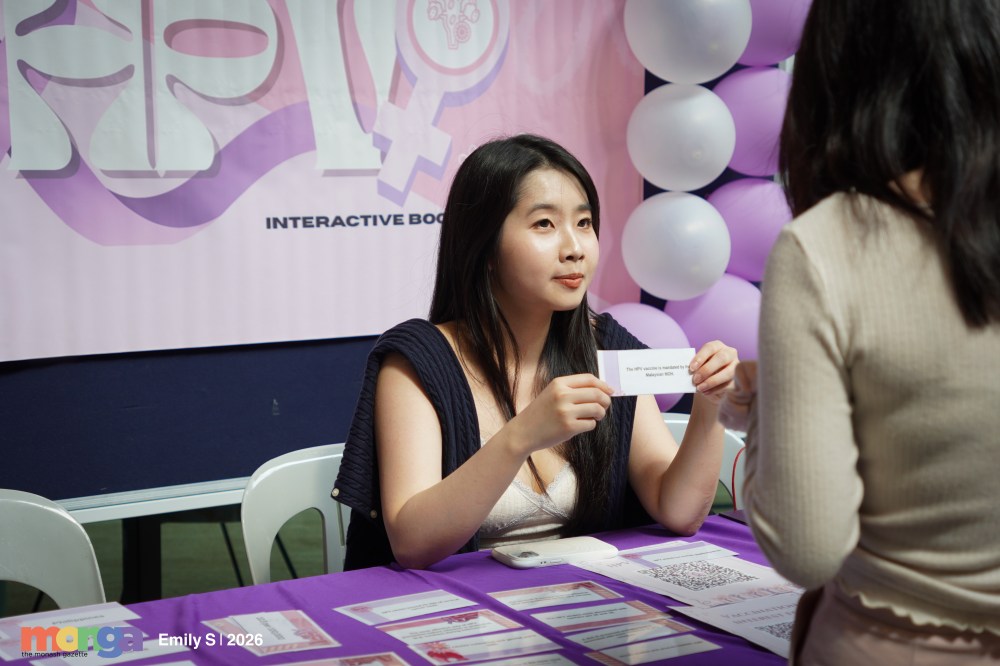
At one table, students leaned over stacks of flashcards, debating answers as if they were competing in a trivia night rather than learning about a virus. One game challenged players to determine whether statements about HPV were true or false, while another asked them to match countries with facts related to HPV vaccination and screening. Answer four questions correctly, and you’d win a small LEGO-style brick toy. What started as a lighthearted challenge quietly turned into a learning experience, with students pausing mid-game to question assumptions and rethink what they thought they knew.
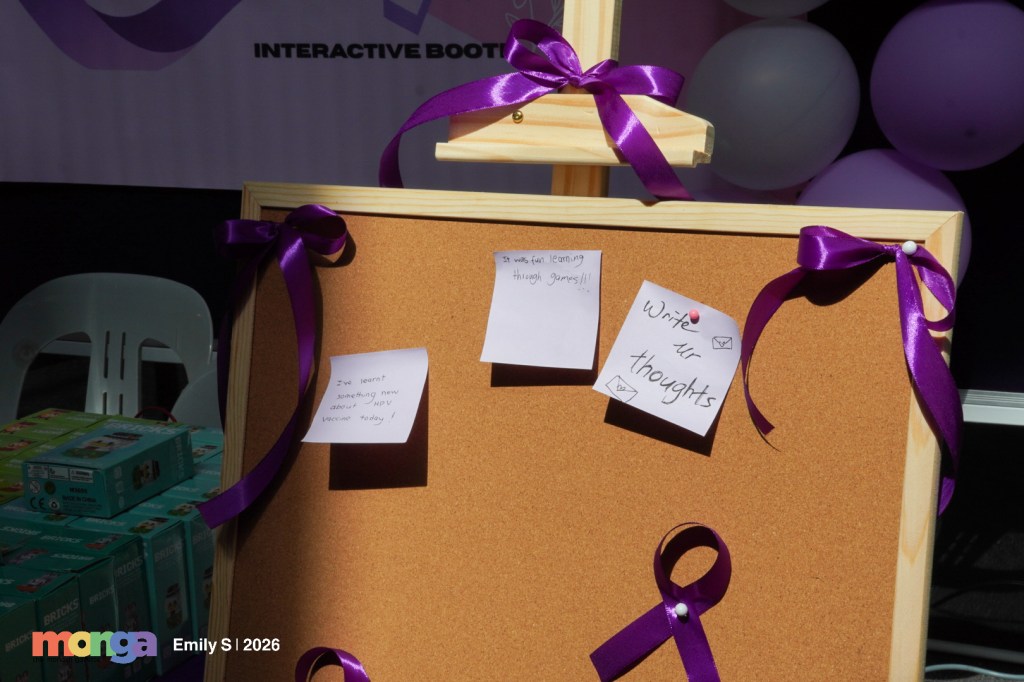
Nearby, a large board covered in colourful sticky notes captured the thoughts of those passing through. Some scribbled quick reflections after participating in the activities. Others simply left short observations.
“I’ve learnt something new about the HPV vaccine today,” one note read. Another said, “It was fun learning through games.”
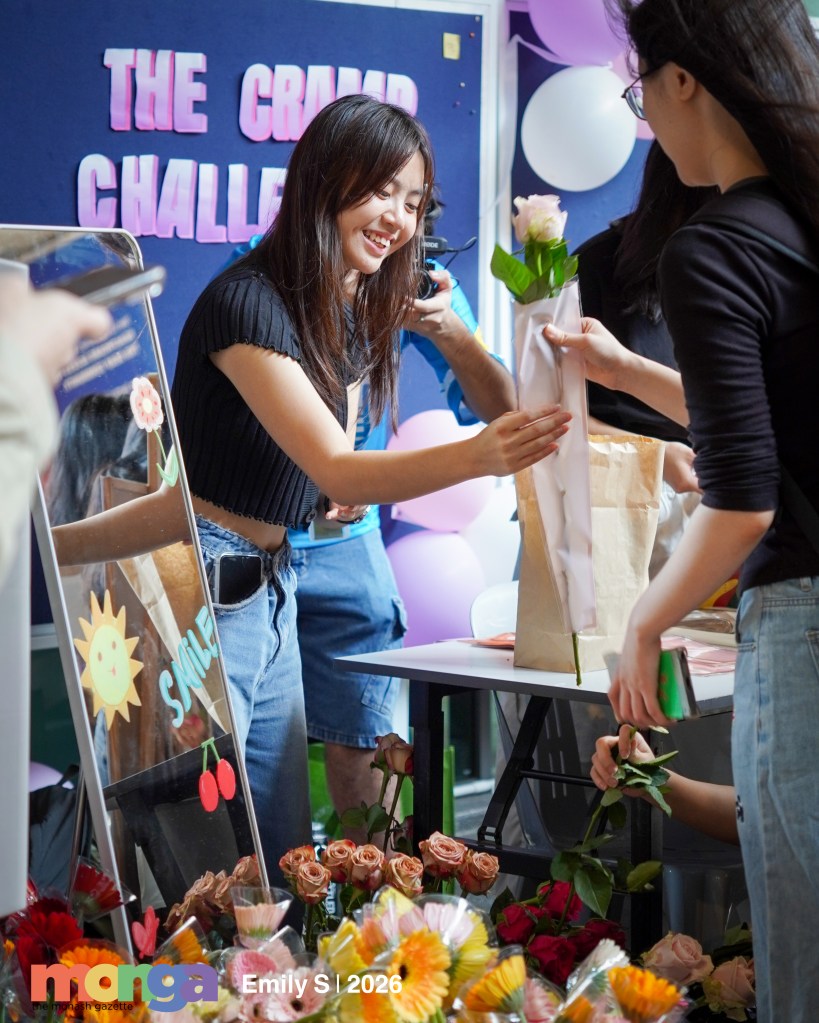
Just a few steps away, the tone shifted from educational to celebratory. Students gathered around a mirror decorated with hand-painted cherry blossoms, a small sun, and the word “smile.” After following the MUSA Welfare Society’s social media pages, visitors were rewarded with a flower and an excuse to snap a quick mirror selfie. For a moment, the booth felt less like a campaign and more like a small corner of campus joy.
But the loudest reactions came from a table hosting what quickly became the unofficial highlight of the event: the Cramp Challenge.
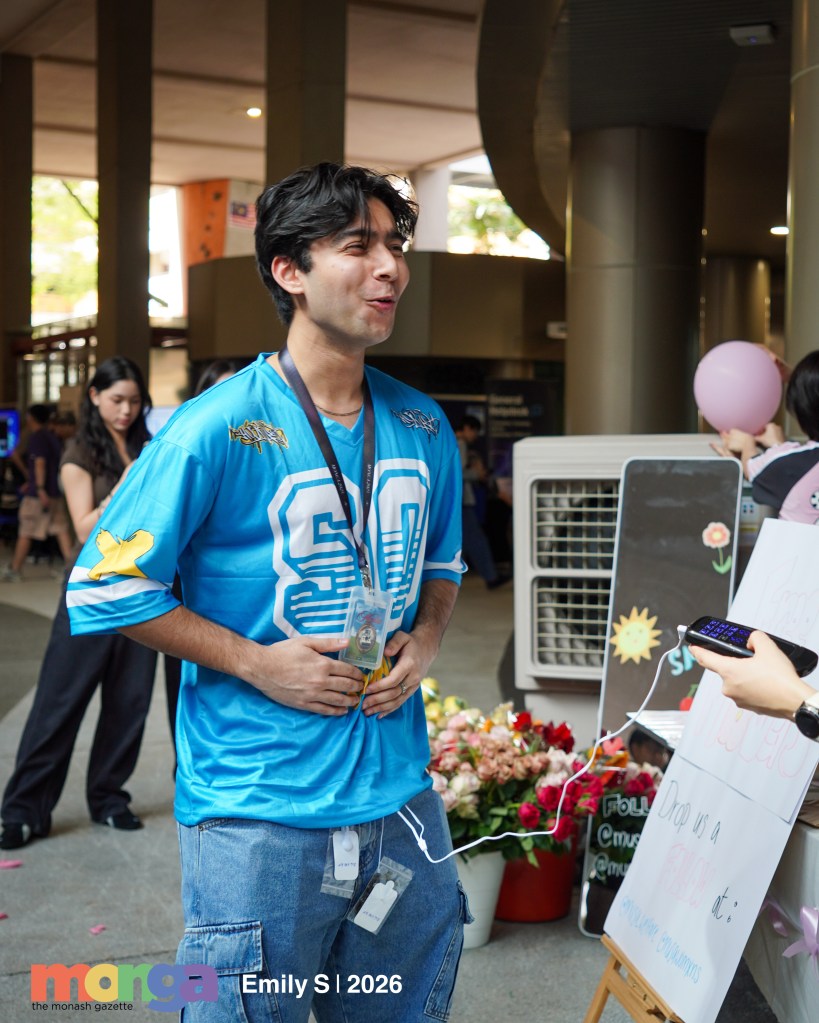
Participants, mostly curious guys, volunteered to try a period cramp simulator, a device designed to mimic the sensation of menstrual cramps through electrical pulses. With multiple intensity levels, the challenge often started with confidence. Level one was manageable. Level two still earned laughs. By level three, reactions began to change.
“You can stop there,” someone from the crowd would say, while another voice added, “That’s not even the highest level.”
What began as a playful dare often ended with volunteers admitting they had underestimated the reality of period pain. Between each attempt, organisers carefully sanitised the equipment before the next participant stepped forward.
Elsewhere at the booth, a quieter activity invited students to take part in something called the Compliment Relay. Visitors wrote anonymous compliments on small pieces of paper and dropped them into a box. Later, another participant would pull one out, read it, and pin it to a board before writing a new compliment for someone else.
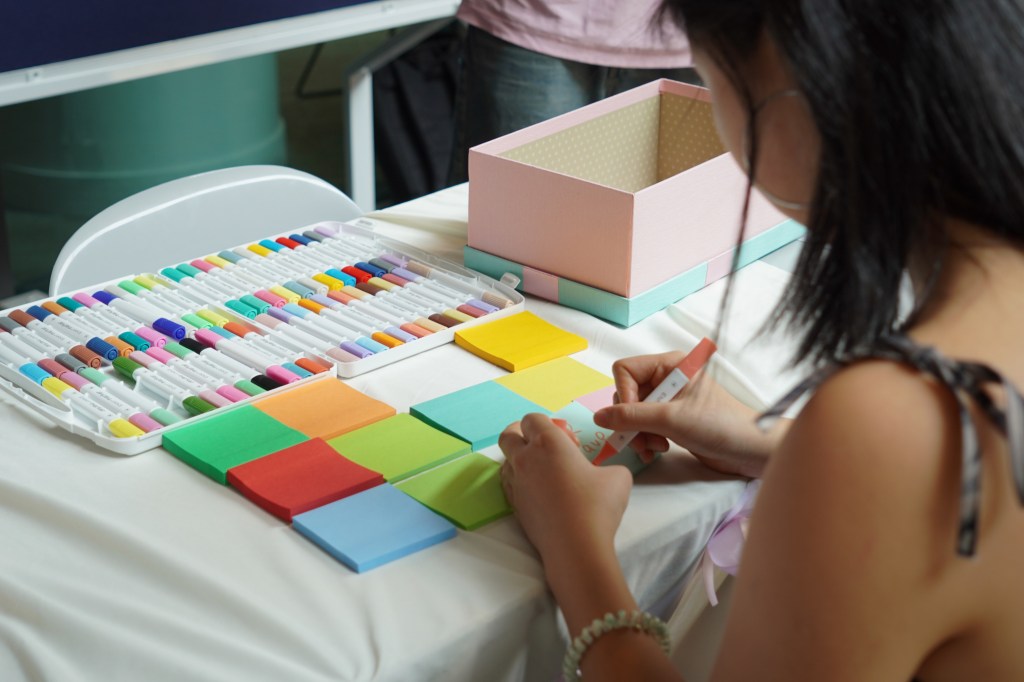
By the end of the day, the board had grown into a collage of small kindnesses passed between strangers.
Behind the games and activities were QR codes linking to feedback forms, vaccination interest forms, and informational resources about HPV. The campaign was supported by the National Cancer Society Malaysia and Apricot Clinic, allowing students to access HPV vaccination at a subsidised rate, an effort to make preventative healthcare more accessible to the student community.
What made the campaign stand out wasn’t just its message, but how it delivered it. Some walked away holding a small toy brick. Others left clutching a flower or laughing about the cramp simulator. But most carried something less visible: the feeling that a topic often avoided in everyday conversation had suddenly become easier to talk about.
And sometimes, that’s exactly where awareness begins.
Photos by Emily S
 musamonga.com