
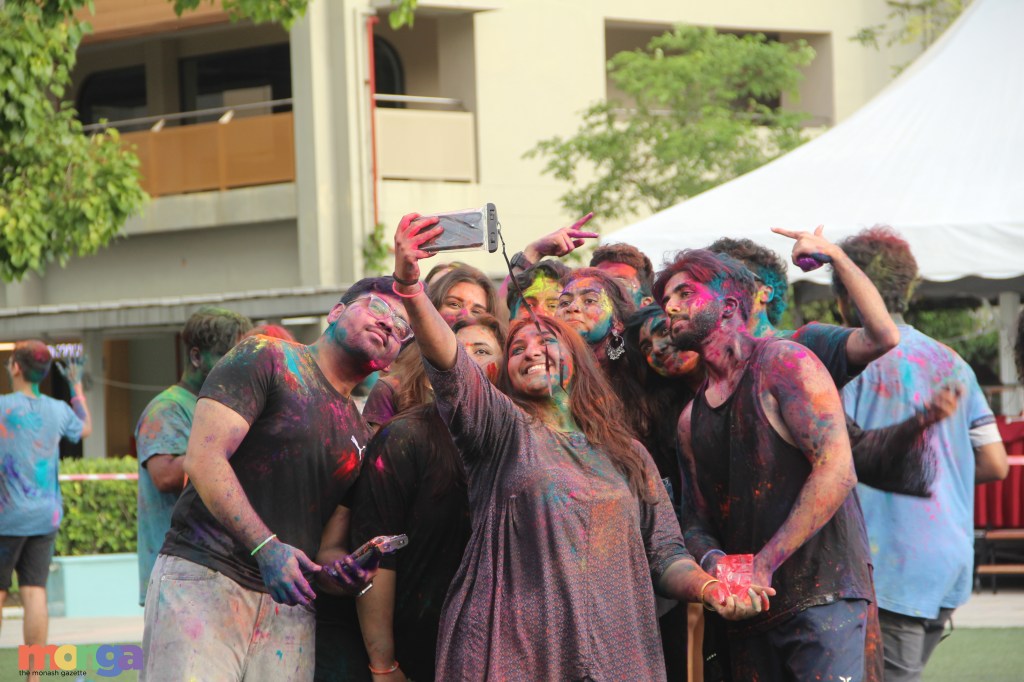
Originally, the concept of throwing powdered colour on each other and then dousing each other with water can seem somewhat strange—maybe even downright sadistic. Holi, better known as the Festival of Colours, personally sounds strange, because why would there be a festival to celebrate all the colours when we see them every day—on objects, on the street, on our bodies, or in nature itself
According to the vivid world of Indian mythology, the story of Krishna and Radha is central. The story goes that Krishna, a Hindu deity, fell in love with the milkmaid Radha, but he was embarrassed that his skin was dark blue and hers was fair. In order to rectify this, he playfully colored her face during a game with her and the other milkmaids. This same game has been played for generations and has been recreated numerous times in legendary Indian movies.
Walking into the event, I was honestly skeptical about how they would recreate this immersive experience—like it had been done in an entire country and numerous well-known Bollywood movies. At the beginning of the event, students slowly trickled in with hesitant faces and nervous smiles as they registered themselves and collected their coloured powders. As part of the dress code, everyone wore light-coloured clothes, and I watched as the crowd on the Monash field grew from a puddle to a sea of pastel-clad students. The air was heavy with joyful anticipation as people held onto those packets of colours like they would fly away.
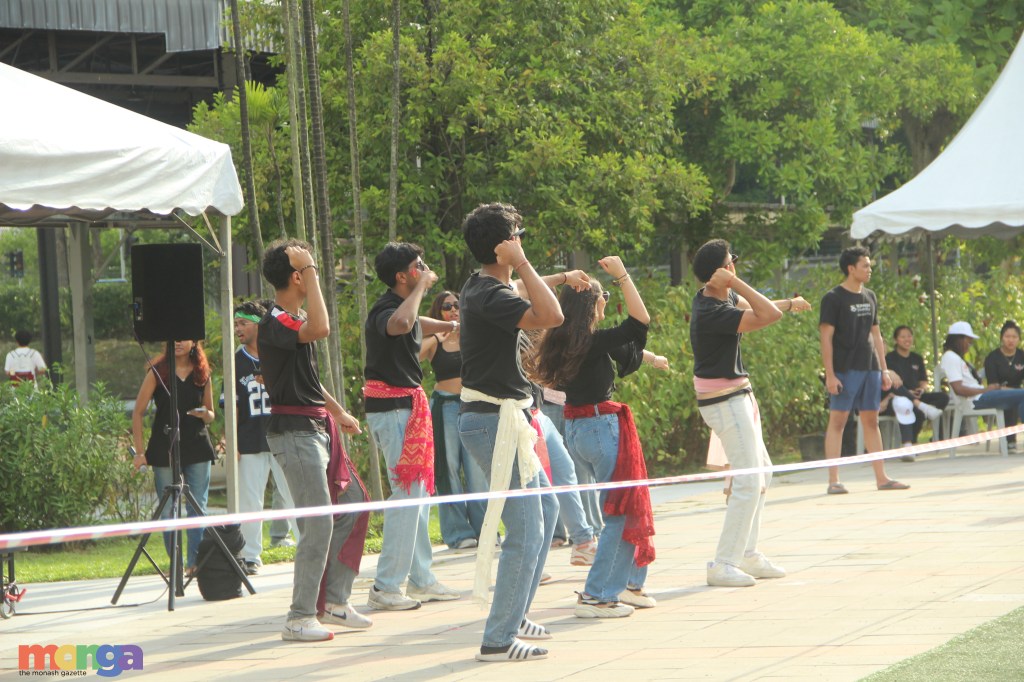
The event was set up with everyone’s needs in mind. The student lounge was used as a makeshift locker to store everyone’s bags, the field was split into dry and wet zones for students to play in, and there was even an emergency booth set up in case of any accidents. Although the event had a slow start, the crowd did not lose energy. Friends lightly threatened each other with their colours, and some even formed a group of their own and began to dance to the live music being played by the DJ. It made me realise that even when the event hadn’t officially started, students created their own fun—because essentially, that was the point of Holi, to have fun.
As the programme started, everyone was given a safety briefing. Although this was a considerate sentiment, it would be fair to say that most were impatient with their colours, as people in the back of the crowd started to break off in fear of getting marked by the colours—and succumbing anyway. I watched as the safety briefing came to an end, the first half of the crowd looked perfectly normal, while the back looked like they’d walked straight into the explosion of a colourful bomb.
To commemorate the event, the enthusiastic hosts initiated a game to grab a fistful of colours and, after a short countdown, toss it up and scream “Happy Holi!” Even though it feels awkward to scream any sort of greeting as university students pursuing degrees that might essentially determine our future, I watched as the clear blue sky was tainted with falling colours, and students screamed “Happy Holi” in childish joy, giggling at the prospect of getting gently dusted by a kaleidoscope of colours.
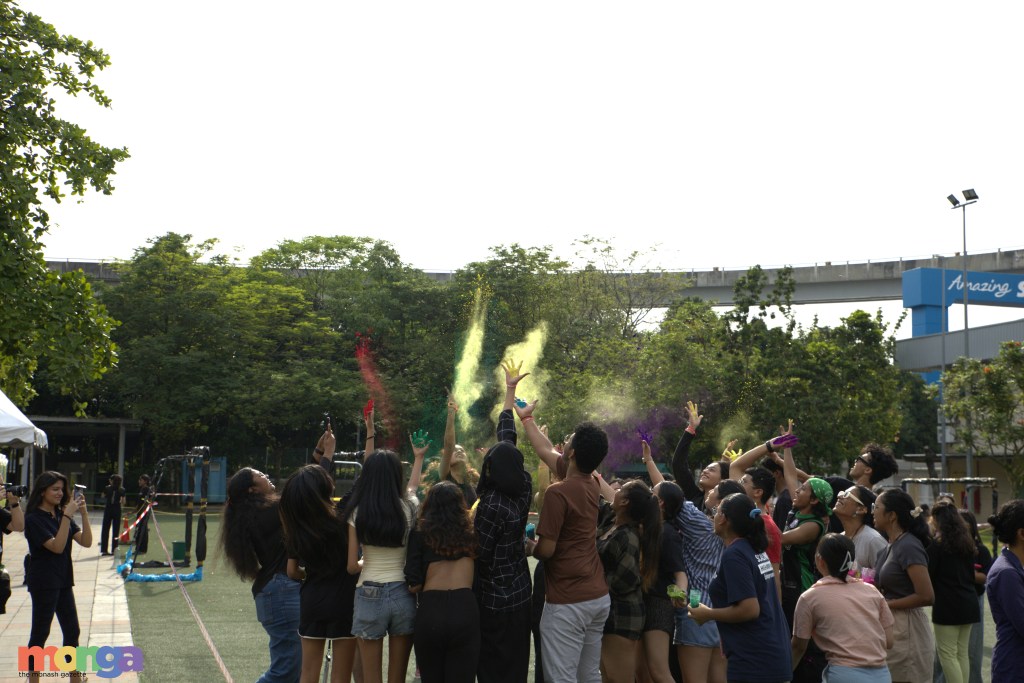
Although the purpose of the game was to just launch the powder into the air, several people grabbed a fistful of colour and launched it into their friends’ faces or raised palms—if they weren’t fast enough. Soon, like a domino effect, this playful attitude spread to the majority of the crowd, and squeals of nervous joy filled the air as students broke off from the crowd to either chase or run away from their friends.
Understandably, the crowd was tough to control. However, the hosts did a great job of grabbing everyone’s attention for the series of performances and games to follow. The first performance included a duo whose dancing was infectiously energetic, spreading their rhythm to the entire crowd while looking suave wearing identical sunglasses. Students erupted in cheers as they swayed to the duo, while some sang along to the songs. After the performance, the crowd was given a giant inflatable ball and water guns to play with. So while the MCs interviewed the performers, there would be a giant inflatable ball launched into the sky, and people looked up to make sure they weren’t the next victim of its impact. Meanwhile, some had their friends in a headlock as they enthusiastically rubbed Holi powder into their heads.
The crowd’s attention was drawn back to the front as the next series of performances started. People intently watched as the group performed to iconic Bollywood songs, spreading their energy to the crowd, who recorded them eagerly and sang along. As the performances came to an end, people launched into the full, unleashed fun of throwing colours at each other. I watched as the pastel-coloured crowd quickly transformed into a burst of different hues, and no one looked the same anymore. People danced around with their friends, singing to the songs that the DJ played. As we got deeper into the day, everyone became coloured from head to toe.
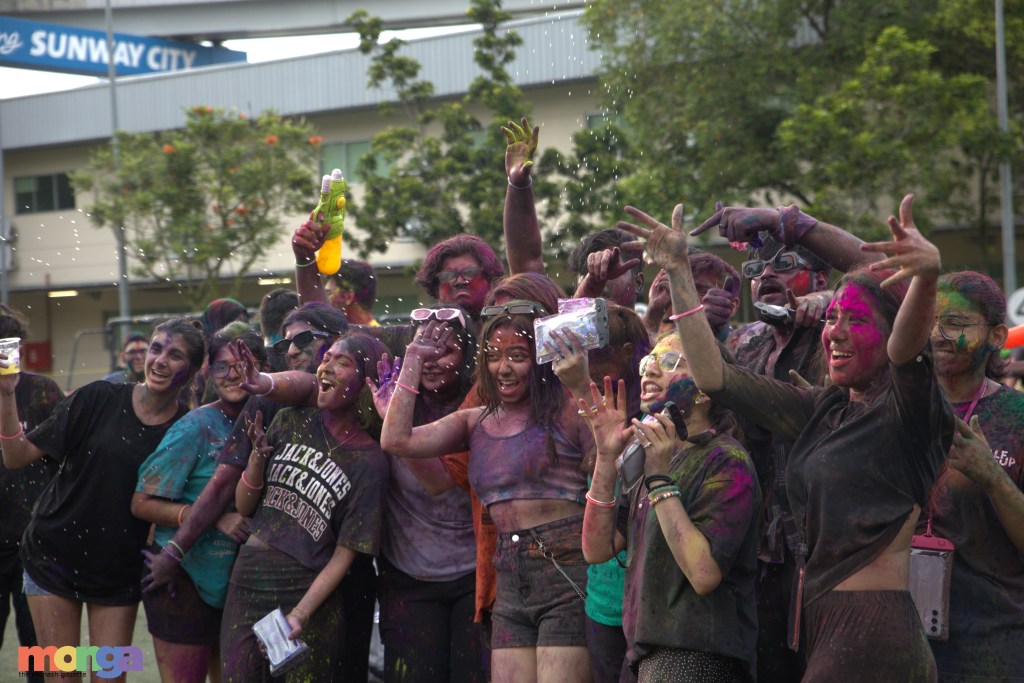
It made me think of the old Indian mythology tale of Radha and Krishna—and for this occasion, race, gender, and societal status didn’t matter, because everyone looked messily colourful anyway. In a world where hyper-individualism is on the rise, I sometimes find myself hyper-fixating on ways to look unique or quirkier. However, on that field, it felt good to see a sea of colourful people laughing and celebrating together—because the existential dread may persist, but the point of living isn’t to make it bearable. It’s to create spaces to be unapologetically joyful—and Holi 2025 managed to do exactly that.
Written by Reona
Photos by Rida and Jia Tong
 musamonga.com