

The aversion of originality is chronically injected into the livelihoods of many Malaysian creatives simply because we find the need to position art and theatre as something that appeals to the masses, something extremely digestible for the purpose of attraction and monetization. Art now can’t simply be left conceptual and raw. There is a need to over explain every single creative decision made and our hands are held throughout the experience, as if we’re incapable of introspectively engaging with the piece of theatre in front of us. It is the unprecedented fear of artists believing that the consumer will not understand their art, that catalyses the very start of art not being left to exist as art.
There’s somewhat of a trend progressing within the creative expression of MUMPAC that has to be reckoned with. A romantic comedy set in a college or a high school, a quasi-profound drama on trauma and human suffering, and the latest edition to this roster, an obscure and complex dark comedy on human relationships with visuals you’re only engulfed with after smoking DMT. Perhaps it’s analogous to the potentiality that MUMPAC has the same group of people spearheading the creative decisions, and comfort and familiarity is something intrinsic to human emotion. I don’t think change and diversity is necessarily always a positive reaction but it is conceivably an aspect that allows your art to grow and prosper, to force your mind outside of the tiny echo chamber you’ve created within the four bounded walls you have your creative meetings in.
Night of Drama brought forth three distinctly unique theatrical experiences.
A Quick One Before the Eternal Worm Devours Monash and my Mother’s Platonic Wife

Parallax. Plotlines are intended to diverge away from the central narrative to explore different facets of the conceptual piece presented in front of you. Parallax does this by extrapolating different themes and conceptual ideas from three people and then intertwining them with each other to produce a complex critique of AI utilisation along with sufficiently platforming human relationships.
This theatrical performance surrounds Xin Yun, a Monash alumni, travelling back to Monash to deliver a speech after winning the Nobel prize. While on campus, she stumbles across Kairo and they both have somewhat of a conversation which allows Xin Yun to derive the fact that Kairo is Kaira’s daughter.
The entire play is a harrowing journey of absurdity and techno-meditative qualms. Our corporeal lives are being forced to intersect with the horrifying emergence of artificial intelligence, effectively rendering your existence to glitch and pixel and transform into a sheep that bows down to the allocation of being able to upload three files into ChatGPT per day. It is the oxymoronic overt subtly at which AI absurdity was being performed that I truly enjoyed. We know AI is objectively damaging and you don’t have to spell it out for us. Parallax intertwined their critique and disdain towards AI within the theatrical performance itself. The dystopian Monash campus, the dystopian AI images with no sense of perspective and composition, the mass surveillance, the predictive policing– aspects of this play that manifested a truly original and unique critical commentary.
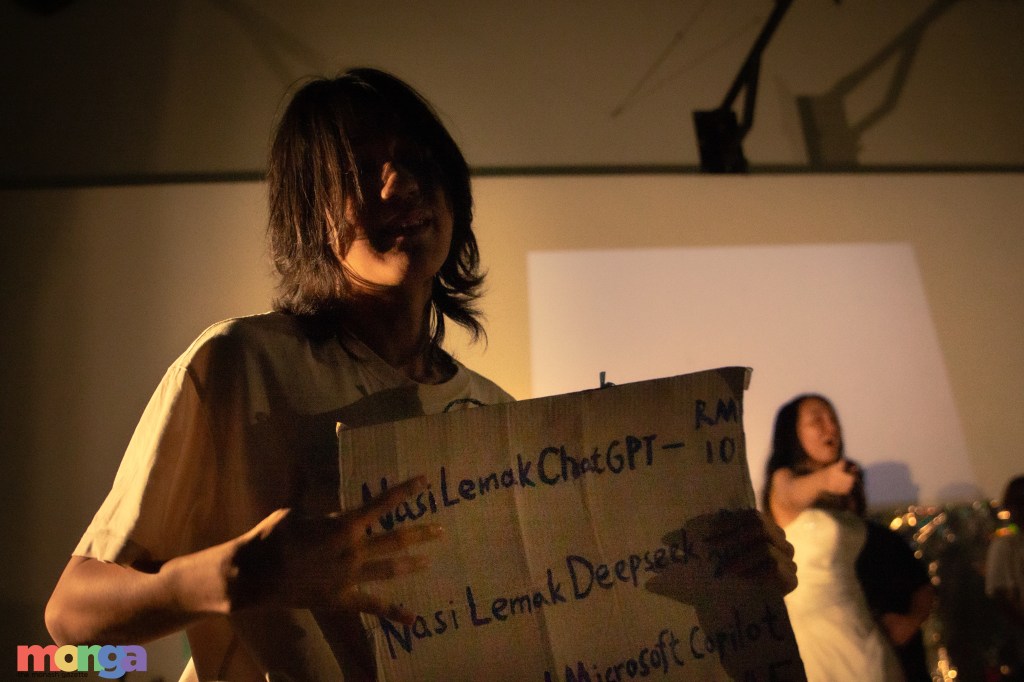
The main intent however, was to platform the relationship between Xin Yun and Kaira. It all feels extremely bona fide and deviates way too far from fiction that allows me to truly have a strong connection with this performance despite having absolutely nothing to do with the actual creation of it. Kaira and Xin Yun– old friends, now estranged. Xin Yun is forced to reminisce about her relationship with Kaira, on how they were the closest of friends, on how they worked together to produce a play, and how Kaira unfortunately fell down the bureaucratic corporate rabbit hole of job applications and the organic academic pressure originating from being a final year student. The play they worked hard to produce, left bare and incomplete, just like their relationship with each other.
It was an overwhelming, despairing, and comfortable experience. Everything seems to contradict each other but so many emotions were experienced. What it feels like, experientially, to consume a light hearted comedic drama is objectively different than to experience grief and wrath and melancholy. Somehow, I have the qualia of experiencing sadness and gut wrenching grief from watching this play but I continue to label it as happiness.
Existentialist Vending Machine, Transform me into Albert Camus

Press B1 to Escape. Combining sci-fi and a physically abusive father opens up the quite direct idea of the central protagonist wanting a sense of normalcy by deriving it from rather strange avenues. The protagonist from this play, Kai, attempted to gain his own personal sense of normalcy through a peculiar vending machine placed in a grocery store. A vending machine which would rupture the fabric of time and transport him either into the past, the future, or allow him to revel in the present.
Plagued with an abusive father and a dreadful existentialist realisation that individuals are the only spearheader of their own lives to create meaningful purpose, Kai seeks comfort by engaging with the vending machine and transporting himself back to the past. The past, that seems at least half better than the present. Kai’s parents were getting along with each other and it was Kai’s sister, Nia’s birthday. On the way out of home, Nia tries to persuade Kai into allowing her to drive his car despite not having a license. Kai tries to stop her but gives in eventually. A rather tiny mistake and both Nia and Kai found themselves in an accident, rendering Kai with a concussion and Nia in a morgue. The past now seems significantly worse than the present.
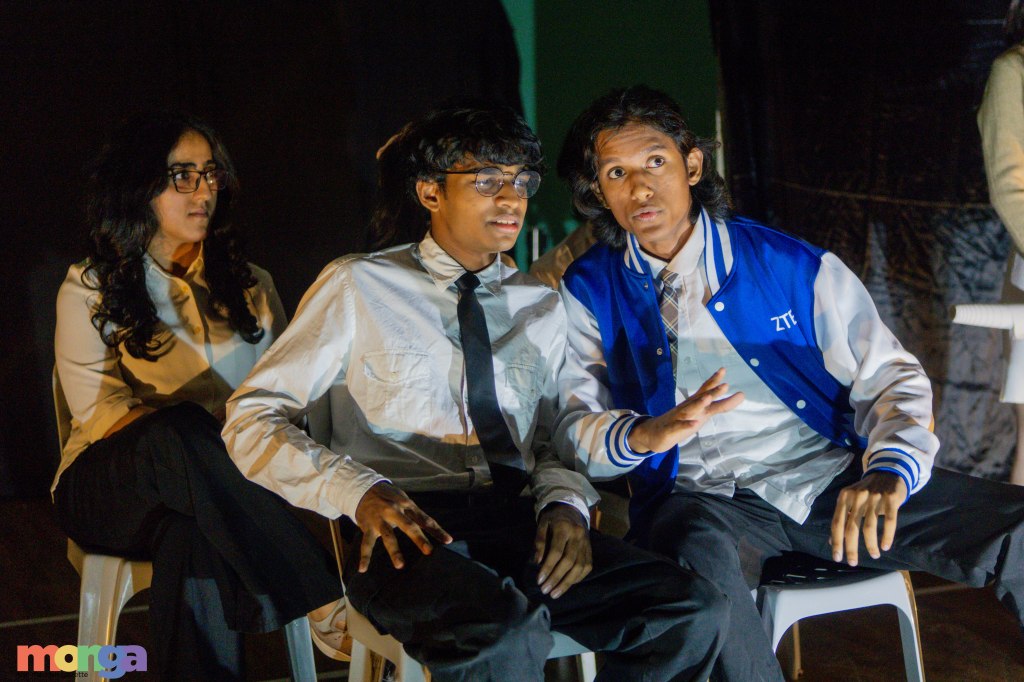
Kai attempts to bring Nia back by seeking refuge at the vending machine. He travels into the future and finds himself positioned as an award-winning writer, beset with alcoholism and once again a big gaping Nia-shaped hole. Kai returns to the vending machine, prepared to press the very last button he hasn’t explored. Transported into a seemingly different world than he came from, Kai is reunited with Nia and realises the substantial impact that can be obtained by simply concentrating on the present instead of allowing our minds to linger towards uncharted territories.
Theatre is something that catalyses rumination. It forces you to think and ascribe meaning, it allows for the conceptual reimagination of our values. What pleasure can I derive from witnessing this play when all of the thinking has already been done for me by the narrator? Why explain every single aspect of the play down to the tiniest detail and rob the viewer from experiencing the rapture of revelling in art? Postulating the very conceptual piece you worked hard and long for, right in front of us.
You Haven’t Known the Triumphs and Defeats, the Epic Highs and Lows of Escaping Prison
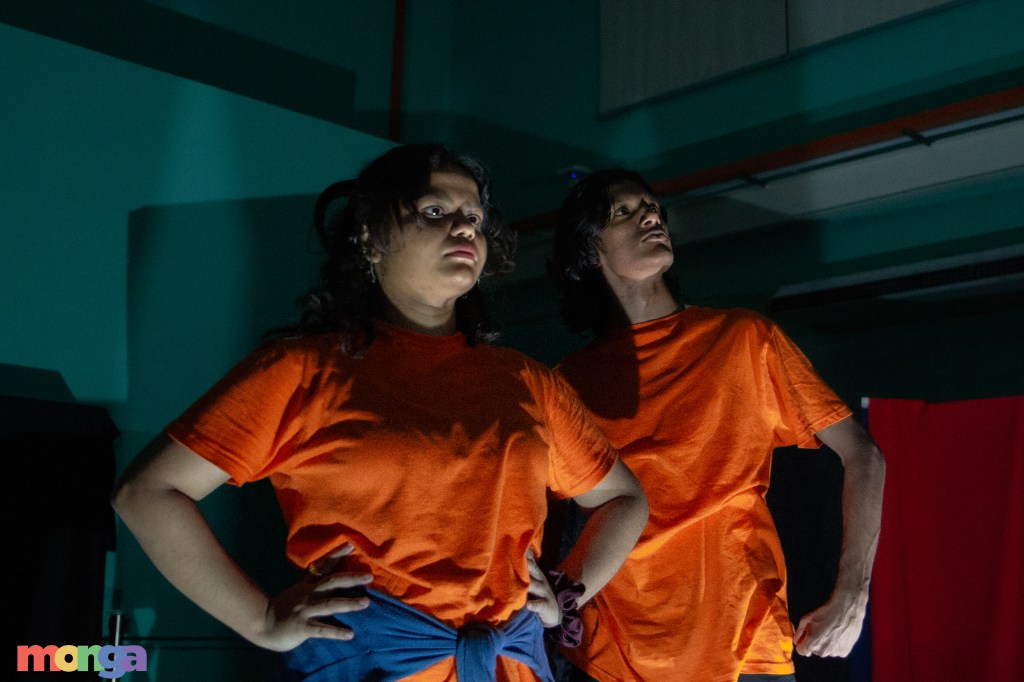
Break Out or Break Up. I should preface by establishing my absolute disdain for romantic comedies, especially ones central to the high school or college experience. It is unfortunately the genre I engage with only when trying to fight a hangover or during a mentally exhausting psychedelic trip, rendering me afraid of most things except cringe dialogue and the performance of awkward titillation.
Break Out or Break Up is a play on words. It is a romantic comedy featuring Milo Vance, played by Kevin Kularatne and his romantic interest, Luna played by the MUMPAC regular, Karen Jong. It is Wild Child but less hedonistic. It is certainly cringe comedy done right.
Milo is somewhat of a prankster and finds himself being transported to a prison facility after pulling a prank during the school assembly. Milo now is required to reckon with the idea of escaping prison in time for the Winter Ball he promised to attend with his girlfriend. As the nerdy kid, Vector– who very unnecessarily broke the forth wall to directly speak to the audience– mentioned that Milo has to break out of prison or break up with his girlfriend for not attending the Winter Ball.
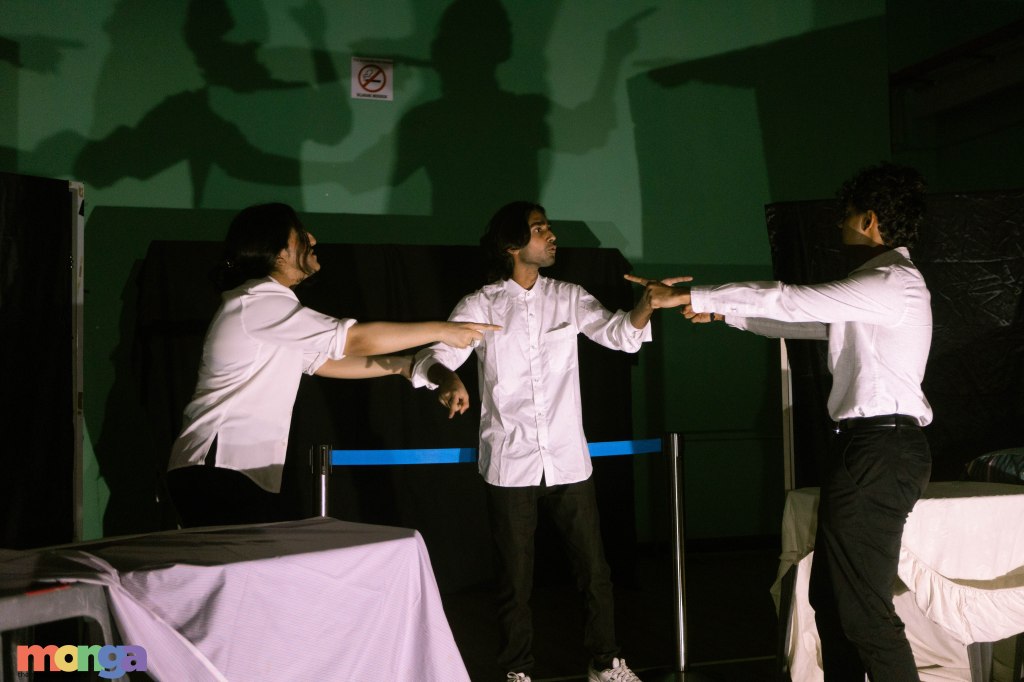
“Look guys, it’s the title of our play”, Vector awkwardly spoke to the audience as silence and perhaps cringe filled the room.
This play depicts the farcical experiences of Milo attempting to escape prison and meeting strange and unique personalities. A conspiracy theorist who appears to be in a some sort of drug-induced psychosis from the constant chatter and titter, a vain and narcissistic jock constantly flexing his muscles as one does in every circumstance they’re in, and an incestual couple seeking refuge in prison to live out their socially distorted lifestyle.
A plan was devised, a poorly articulated minecraft reference was employed, Chad flexed his muscles, and Milo is finally out of prison, reunited with Luna right after blackmailing the principal for having an affair with Ms. Pepper, their teacher. It was a plot-driven play with an extremely fast pace and it was certainly received well by the audience.
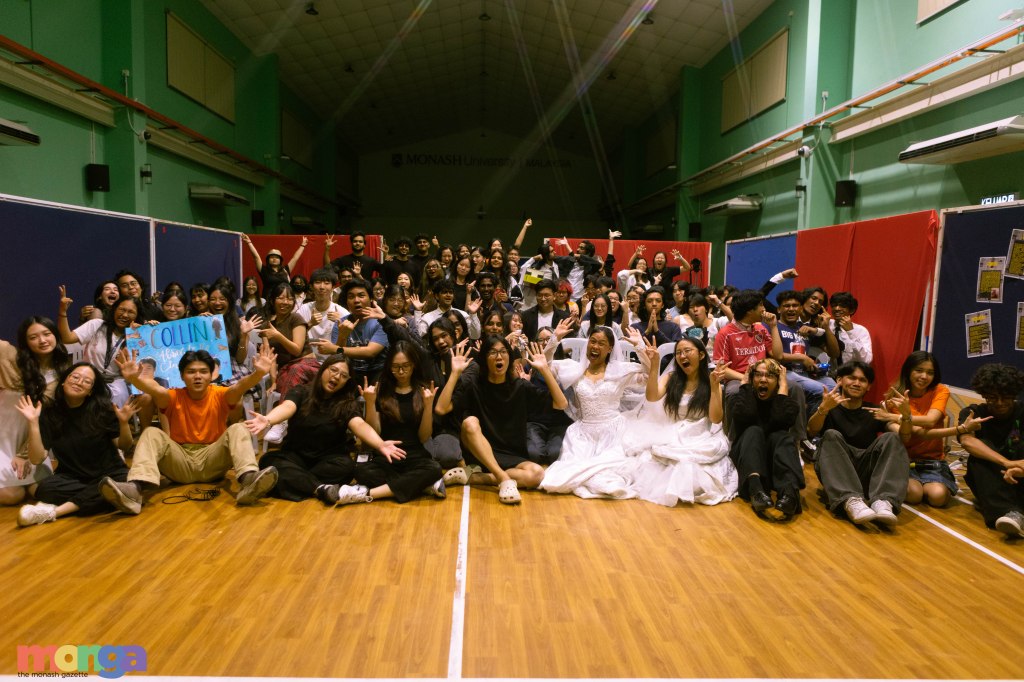
Where is the grand arbiter of insanity and unconventionality? Gyrate through the grapevines of human emotion and relinquish all self doubt. Cry your ideas and transform them into a god awful maximalist manifestation of self-interpretative thespianism.
MUMPAC, you were fantastic despite the odds of having to cater towards a populous that requires a golden spoon shoved into their throats to teach them how to ruminate.
Written by Yashven Jayabalan
Photos by Crystal and Akyla
 musamonga.com